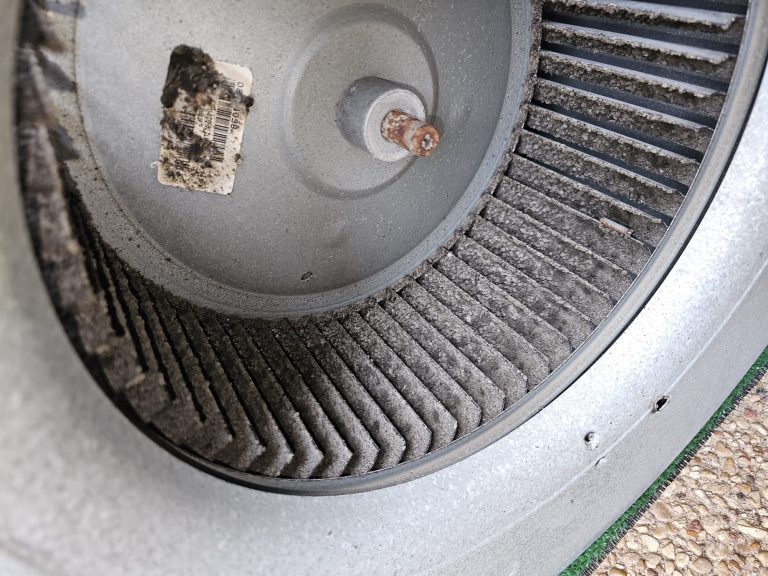
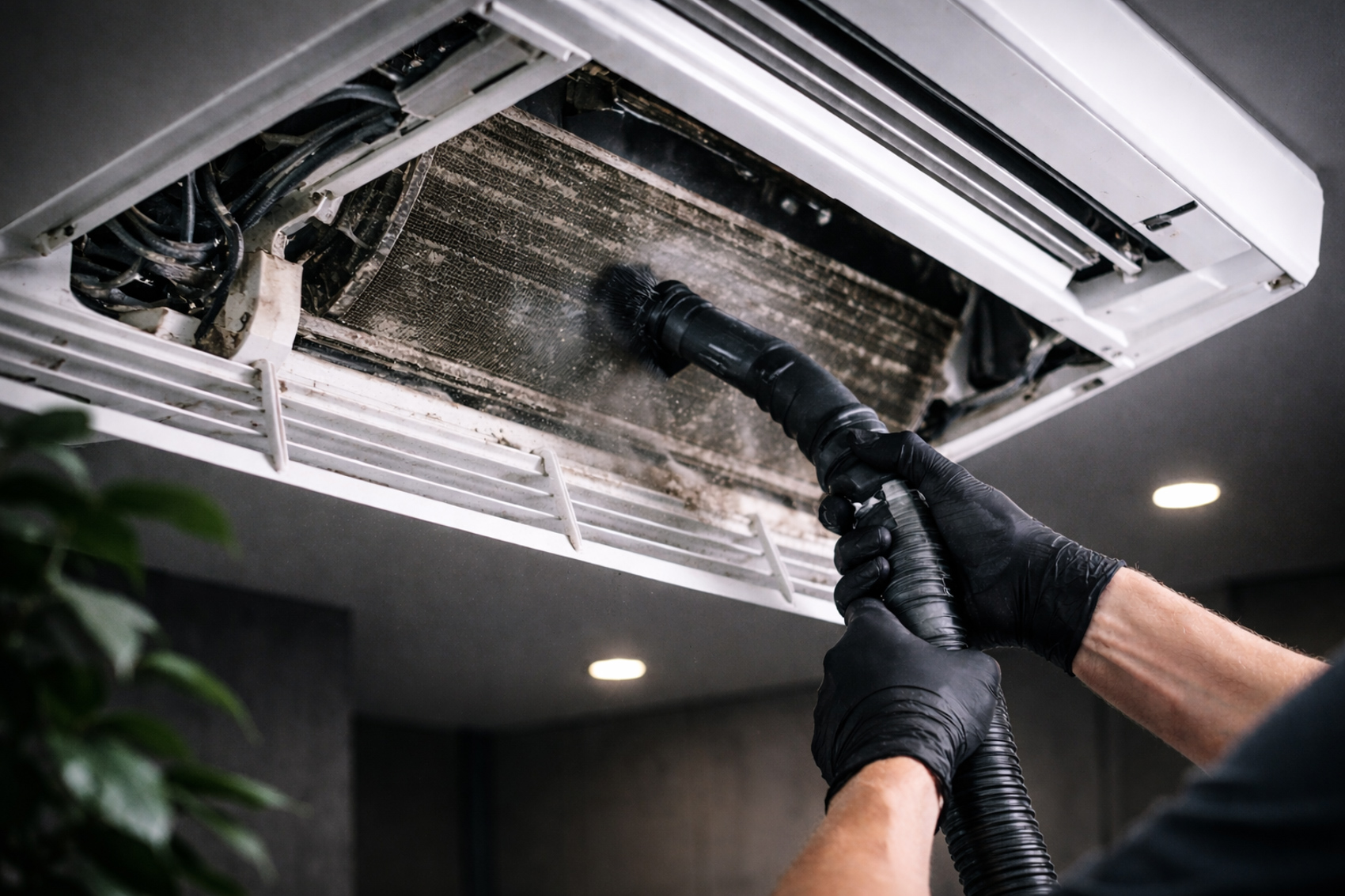
Mold inside an HVAC system is not always obvious from the living space. Homeowners may first notice dark spotting around a vent, a persistent musty odor, condensation near HVAC components, or signs that moisture has reached the ductwork.
None of these signs proves mold is present on its own, but they are strong indicators that your system requires a closer look. For Austin-area homeowners, understanding what to look for, and what not to assume, helps determine whether the issue involves ordinary dust, moisture buildup, damaged insulation, or active mold growth.
| Moisture Source / Leak ➜ | Damp Dust & Organic Debris ➜ | Spores / Microbial Growth ➜ | Supply Vent Discharge |
|---|---|---|---|
| • Clogged Drain Pan • Unsealed Duct Joint |
• Trapped Pet Dander • Accumulated Dust |
• Earthy/Musty Odors • Damaged Insulation |
• Black Spotting • Moisture Stains |
Key Takeaways
- Appearance Can Be Deceptive: Dark or fuzzy growth can be a warning sign, but appearance alone cannot reliably confirm mold; dust, soot, and adhesive residue often look identical.
- Moisture Drive: Moisture is the primary condition that enables mold to develop inside HVAC systems.
- Replacement vs. Cleaning: Porous, wet, or moldy insulated duct material generally requires removal and replacement rather than surface cleaning.
- Source Identification First: Removing visible contamination without fixing the underlying moisture source will result in the growth returning.
Common Signs of Suspected Duct Mold
Before jumping to conclusions, evaluate where and how these symptoms present throughout your home:
1Visual Discoloration Around Registers
Look for unusual spotting, streaks, or fuzzy-looking residue around supply vents and return-air grilles. Pay extra attention to areas where condensation or water staining is visible. While dust naturally collects near moving air, irregular dark growth paired with moisture demands attention.
2Persistent Musty Odors on Startup
A recurring earthy smell that spikes as soon as the AC turns on indicates that air is passing across a contaminated, damp surface, such as an evaporator coil, clogged drain pan, or saturated duct liner.
3Visible Condensation & Water Stains
Condensation forms when warm, humid air contacts cold ductwork, particularly in unconditioned spaces like attics or basements.
| Indicator | Common Cause | Action Required |
|---|---|---|
| Water dripping from vent covers | Uninsulated/under-insulated metal ductwork | Seal and insulate duct exterior |
| Standing water around air handler | Clogged condensate drain line or cracked pan | Clear drain line / replace drain pan |
| Water-stained ceiling or drywall | Active duct or plumbing leak | Fix leak and replace damaged drywall |
| Soggy fibrous duct insulation | Saturated porous material | Remove and replace affected duct section |
What Causes Mold Growth in HVAC Systems?
Mold requires two main ingredients to thrive inside your ductwork: moisture and organic nutrients (such as house dust, skin cells, and pet dander).
Is the Suspected Material Cleanable?
| Hard-Surface Ducts (Bare Sheet Metal / Rigid Duct) |
Porous / Flex Insulation (Fiberglass Lining / Flex Duct Interior) |
|---|---|
| • Professional Cleaning • EPA-Registered Disinfection |
• Cannot Be Safely Sanitized • Section Removal & Replacement |
According to EPA guidelines, when porous insulated ductwork becomes wet and moldy, it cannot be effectively cleaned and should be replaced. Hard-surface metal ducts, however, can typically be thoroughly cleaned and disinfected once the moisture issue is solved.
Professional Solutions vs. DIY Precautions
What You Can Check Yourself
- Remove and clean dust from accessible, hard-surface vent covers.
- Inspect and replace dirty HVAC filters regularly.
- Check around your indoor air handler for visible standing water or active leaks.
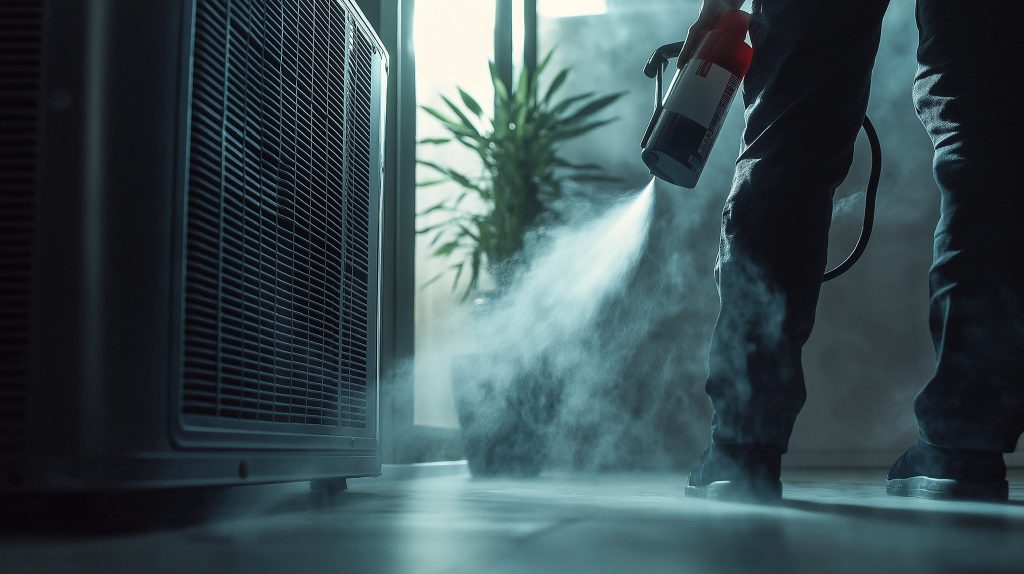
Caution: Avoid spraying household disinfectants, bleach, or air fresheners into return vents or duct runs. Masking odors does not resolve the moisture problem, and unapproved chemical sprays can damage equipment or worsen indoor air quality.
When to Call DuctXperts
If inspection reveals widespread contamination or wet insulation, a professional protocol is required:
- Root-Cause Moisture Repair: Clearing blocked condensate lines or sealing air leaks.
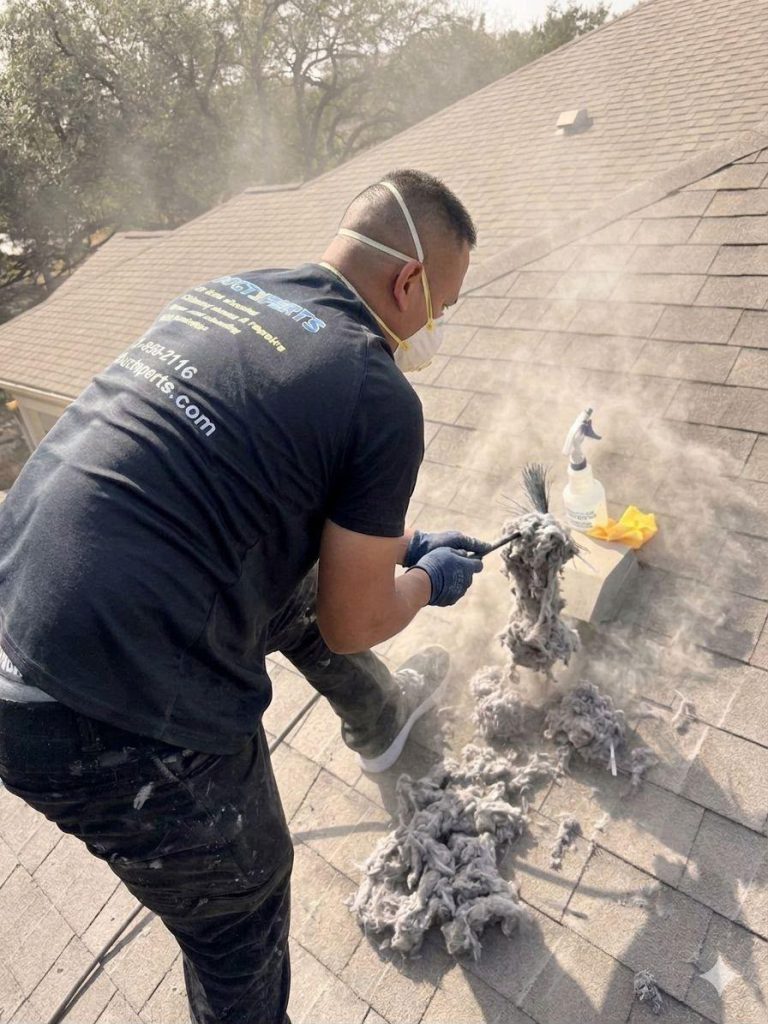
- Systemic Air Duct Cleaning: Utilizing HEPA-filtered vacuum systems to clean supply and return lines.
- Targeted HVAC Disinfection: Applying EPA-registered antimicrobials to non-porous surfaces.
- Duct Replacement: Replacing ruined flex ducts or soggy internal insulation.
- Preventative IAQ Controls: Installing HVAC UV Light Systems near evaporator coils to inhibit future microbial growth.
Frequently Asked Questions
Can you tell if duct mold is dangerous by its color alone?
No. Mold species cannot be identified by color (black, green, white, or brown), as color varies based on age, moisture content, and light exposure. Professional evaluation or lab testing is required for identification.
Why are my supply vents clean if there is mold inside the system?
Supply vents represent only the final exit point. Contamination often starts deeper inside concealed trunk lines, near the air handler, or along the evaporator coil assembly before becoming visible at the registers.
How do I keep mold from returning after a professional cleaning?
Control indoor humidity and moisture. Ensure your condensate line drains freely, replace filters regularly, seal attic duct leaks, and ensure all ductwork in unconditioned spaces is properly insulated.
Stop HVAC Moisture Problems at the Source
If you suspect mold or notice persistent musty odors in your Austin home, DuctXperts can evaluate your complete system to identify the cause and recommend the right path forward.
Take control of your indoor air quality. Contact us today to schedule a professional duct inspection or request a service estimate.