
A musty smell from the air conditioner is one of the most common complaints in Austin homes, and it rarely fixes itself. The odor usually points to moisture or buildup somewhere in the system, and the right fix depends on where and when the smell appears. This guide is built around the fix: what to check first, what you can safely do yourself, and when to bring in a technician.
Key Takeaways
- The timing of the smell, such as at startup or all the time, helps narrow the cause.
- A dirty filter, slow condensate drain, and damp coil are the first places to look.
- Masking the odor or spraying cleaners into vents does not fix the moisture behind it.
- Persistent odors, visible growth, or water damage deserve a professional inspection.
Let the Timing of the Smell Point the Way
When the smell shows up is one of the best clues. The table below connects common patterns to likely areas and a sensible first step. These are starting points and not a diagnosis.
| What You Notice | Likely Area | First Step |
|---|---|---|
| Smell for a few minutes at startup, then fades | Damp coil or drain pan; stale air in ducts | Check the filter and look for slow drainage |
| Smell stays whenever the AC runs | Persistent moisture, dirty coil, or contaminated component | Schedule an inspection |
| Smell near one vent or room only | Local duct issue, leak, or damp insulation | Inspect that duct run |
| Sour or “sweaty sock” smell in heating mode on a heat pump | Residue on the coil | Have the coil evaluated |
| Water near the air handler or a stained ceiling | Clogged condensate line or leak | Stop and call a technician |
If you want the full picture of what causes the smell, our article on what causes a musty smell when the AC turns on covers each source in detail. This guide focuses on fixing it.
The Easy Fixes You Can Try Today
Start with the low-risk steps, and stop if anything feels beyond your comfort level.
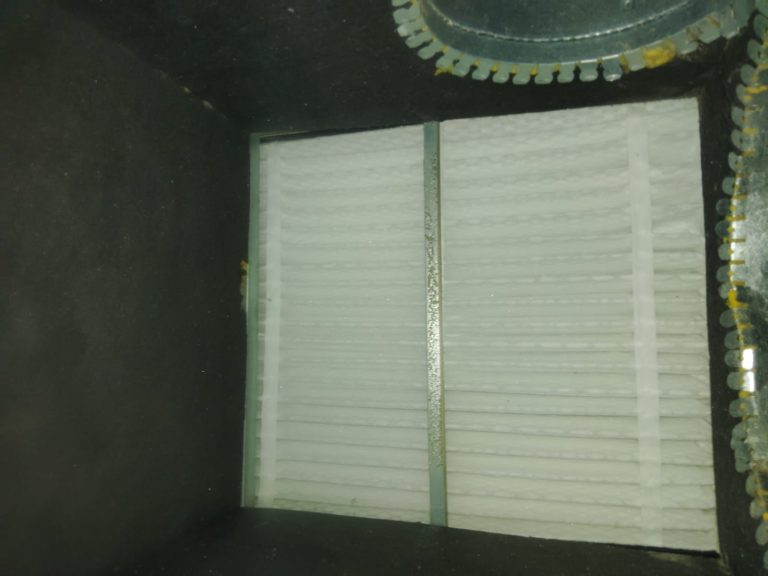
- Replace the air filter. A dirty filter holds moisture and dust and restricts airflow.
- Check that the drain line is flowing. Look for standing water in an accessible drain pan or a drain line that is slow to clear.
- Open and clear supply and return registers. Blocked vents can disrupt airflow and humidity control.
- Run the fan or follow your thermostat’s humidity settings if your system has them.
- Note the pattern. Record when the smell occurs and where it is strongest.
Some manufacturers recommend periodically flushing the condensate line. Check your equipment’s instructions or ask a technician, and do not pour bleach or strong chemicals into the system without guidance.
Why Austin Homes Are Especially Prone
Central Texas has a long cooling season and high humidity during much of it, so coils spend months wet and cold. Add attic duct runs that sweat in the heat, and moisture has plenty of places to collect.
Newer systems can also have drain or insulation issues that only show up after a full cooling season. Moisture control, rather than cleaning alone, is usually the long-term answer.
When the Fix Needs a Technician
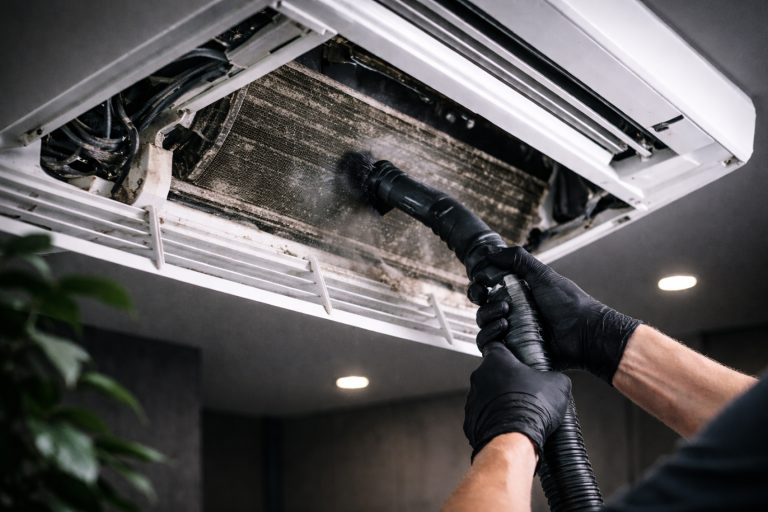
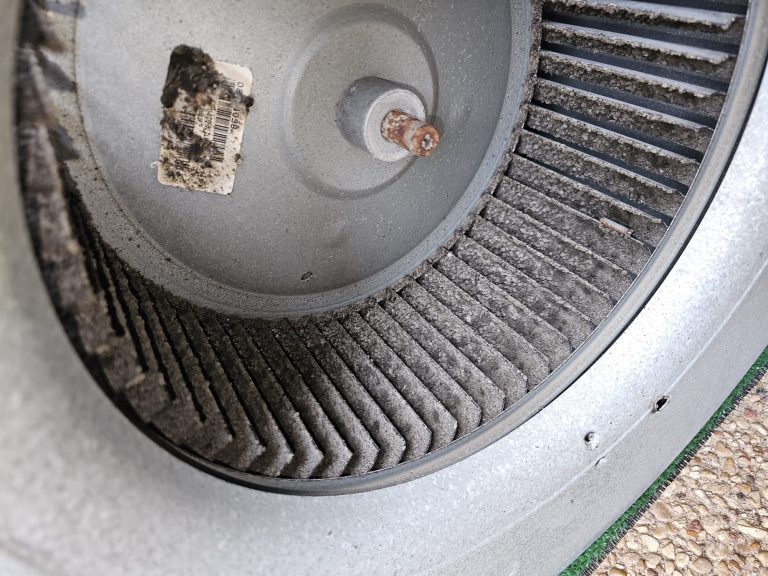
If the simple steps do not work, the cause is likely inside the equipment or ductwork. A technician can inspect the evaporator coil, clean or clear the drain, check duct insulation, and look for leaks that let humid air reach cold surfaces.
Depending on what they find, the right step may be coil cleaning, drain repair, duct sealing, insulation replacement, or targeted disinfection. Our HVAC disinfection service addresses microbial contamination on accessible surfaces, and HVAC repair warning signs can help you recognize when equipment needs repair.
| Task | Homeowner or Technician | Why |
|---|---|---|
| Replace the filter | Homeowner | Simple and low risk |
| Look for standing water near the air handler | Homeowner | A visual check only; do not open equipment |
| Clean the evaporator coil | Technician | Requires access and the right method |
| Clear or repair the condensate drain | Technician | Needs inspection and proper repair |
| Replace wet or damaged duct insulation | Technician | Wet porous material generally cannot be cleaned effectively |
Not Sure Whether It’s Dirt, Drainage, or Something Else?
The same smell can come from very different problems, and treating the wrong one wastes money. An inspection looks at the coil, drain, and ducts so you know whether cleaning, repair, or moisture control is the right next step.
What Not to Do About a Musty Smell
A few common reactions make the situation worse or just hide it.
- Do not spray fragrances or disinfectants into the vents. They mask the smell and do not fix the moisture source.
- Do not run an ozone generator in your home as a fix. The EPA says its effectiveness against biological contaminants in ducts is unproven.
- Do not assume mold or rule it out. Dust, damp filters, and mold can smell similar, so confirmation takes inspection.
- Do not ignore water. Wet insulation and standing water should be fixed promptly.
The EPA’s brief guide to mold, moisture, and your home explains that moisture control is the key to preventing mold growth.
Does Duct Cleaning Fix a Musty Smell?
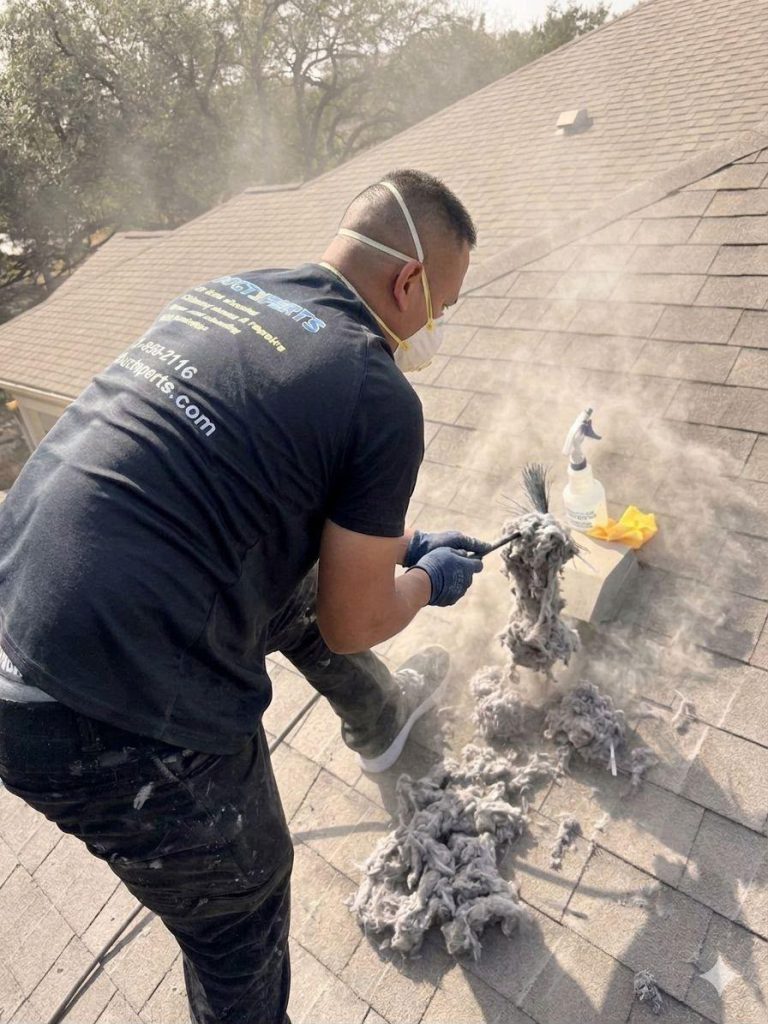
Sometimes, but only when buildup in the ducts is the actual source. If the odor comes from a wet coil or a clogged drain, cleaning the ducts will not remove the moisture, and the smell will likely return.
When growth or heavy buildup is confirmed in ductwork, cleaning and moisture correction work together. Wet or moldy insulation generally cannot be cleaned and may need replacement. For suspected growth, our guide to what to look for with mold in air ducts explains how to think about it, and signs you need duct replacement covers when replacement makes sense.
Frequently Asked Questions
Why does my AC smell musty when it first turns on?
Moisture on the evaporator coil or drain pan can leave odors that blow out at startup and fade as air circulates. Stale air in ducts can do the same. If the smell lingers beyond a few minutes or returns daily, have the coil, drain, and ducts inspected.
Is a musty AC smell always mold?
No. Dust, damp filters, and microbial growth can all smell musty, and you cannot confirm mold by smell or appearance alone. If you see growth or the smell persists, have the system inspected. Mold needs expert confirmation, and the underlying moisture source has to be corrected or the problem can return.
Can I fix a musty AC smell myself?
You can replace the filter, check that registers are open, and look for slow drainage or standing water. Anything involving the coil, drain pan, or inside of the equipment is better left to a technician. Avoid spraying products into vents, since they mask the odor without addressing moisture.
How much does it cost to fix a musty AC smell?
The cost depends on the cause, which could be as simple as a filter or as involved as drain repair or insulation work. Rather than guessing, get an inspection first. DuctXperts offers a free inspection in Austin and quotes one fixed price before any work begins.
Will a UV light stop my AC from smelling musty?
UV lights are sometimes installed near the coil to help limit microbial growth on exposed surfaces, but they do not replace filtration, cleaning, or moisture control. They may support a solution once the moisture issue is addressed. Our guide on UV light for air ducts explains what they can and cannot do.
Get to the Source of the Smell
A musty AC is usually telling you where moisture is hiding. DuctXperts serves Austin and the surrounding Central Texas area, with free inspections and one fixed price quoted before work starts, so you can fix the cause and not chase the odor.
Schedule your inspection or call (512) 656-2116.